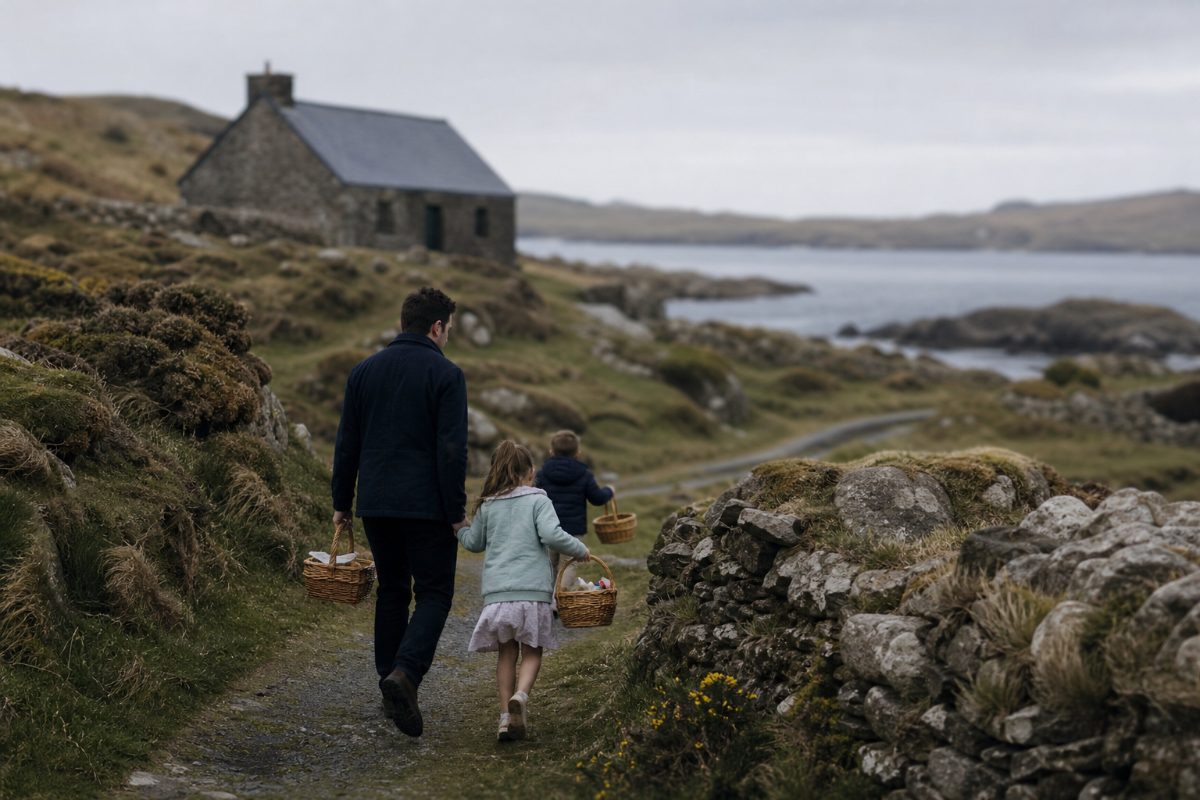
Ask someone in France or Italy what they do at Easter and you'll hear about elaborate chocolate displays, long lunches, and perhaps a Sunday Mass. Those things happen here too. But the Irish Easter carries a few layers that you won't find anywhere else in Europe, and that combination is worth pausing on.
The most obvious difference is the Easter Rising commemoration. The 1916 Rising began on Easter Monday, and that timing was not accidental. The choice of Easter was deliberate, loaded with symbolism about sacrifice and rebirth. So every year, the bank holiday that elsewhere in Europe is simply a chocolate-and-lamb-dinner occasion carries this additional weight here. State ceremonies, local commemorations, wreath-laying at monuments in towns that most tourists never reach. It sits quietly alongside the religious observance, neither cancelling it out nor being cancelled by it.
Then there is Holy Week itself, which older generations in Ireland still treat with a seriousness that has largely faded in countries like Spain or Portugal, where it once meant something similar. Good Friday was, until 2018, the one day of the year you could not legally buy alcohol in a pub. That law is gone now, but the instinct lingers. Some families still eat fish on Good Friday as a matter of course, not out of strict piety but out of habit and a vague sense of respect. Chippers and fish and chip shops across the country do their best trading of the year on that one evening.
The food traditions around Easter here are also slightly different to the European mainstream. Hot cross buns are eaten, yes, though they owe as much to British influence as to any native custom. Simnel cake, with its marzipan layer and eleven balls on top representing the apostles (minus Judas), appears on tables in a way that feels distinctly these islands. Easter eggs are given, sometimes in enormous quantities, with the chocolate consumption reaching levels that would alarm any sensible dietitian.
What genuinely sets Ireland apart, though, is the way Easter functions as the first real gathering of the year. Christmas pulls families together in December, but by Easter there is a hunger for it. The evenings are getting longer. There is something growing in the garden again. People drive across counties to see relatives they haven't seen properly since the new year. The bank holiday weekend, with four days off in most cases, makes it possible. Easter Sunday dinner, in many homes, rivals Christmas Day for the number of chairs squeezed around the table.
There is also a strand of Irish Easter that is entirely secular and community-focused: egg hunts in local parks, parish fundraisers, drama society productions, the first outdoor events of the spring. The GAA calendar is in full swing by this point and club matches pull crowds that wouldn't be out of place in summer.
None of this is unique in isolation. Other countries have religious customs, family gatherings, and public commemorations. But the specific combination here, the 1916 layer sitting beneath the Christian one, the food habits, the particular Irish sense that this weekend signals something genuinely beginning, adds up to something you wouldn't find in quite the same form anywhere else on the continent. Worth recognising, even if you're mainly there for the chocolate.