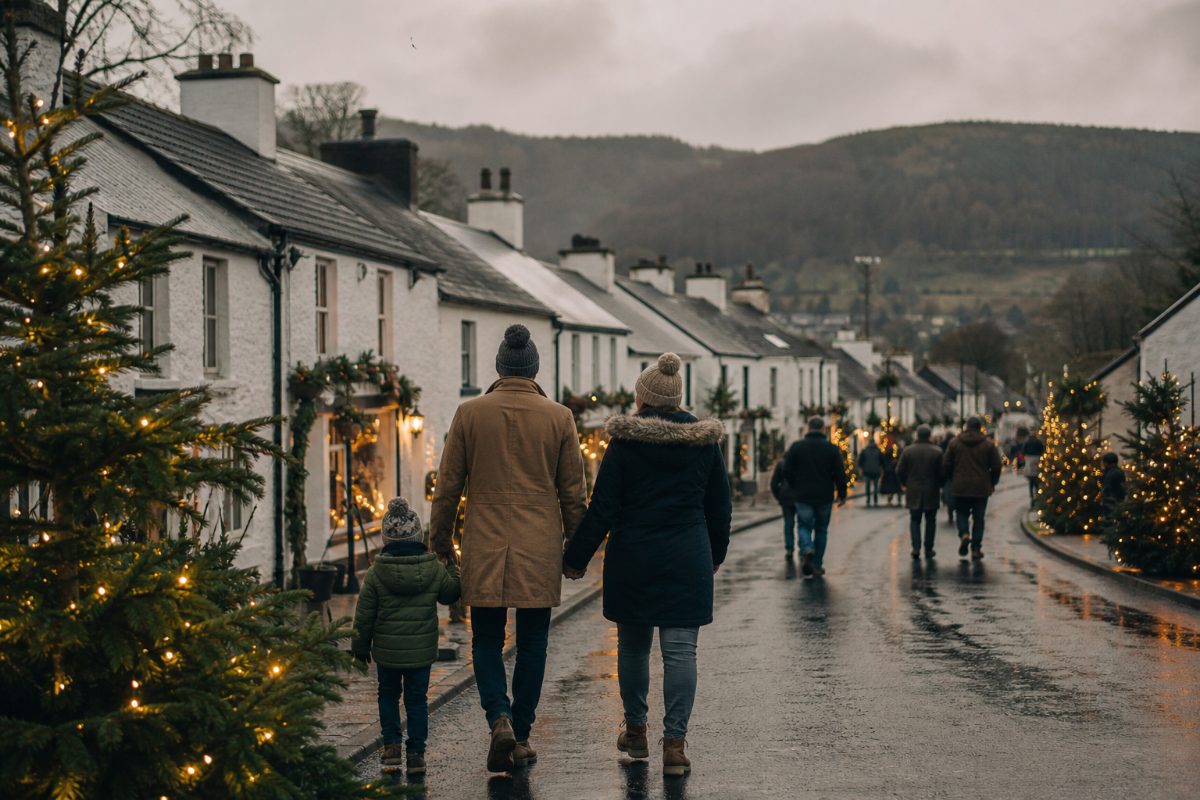
Ask someone from Galway, Kilkenny, or a small parish in Donegal what Christmas looks like in their house, and you will get a very different answer from someone who grew up on the southside of Dublin. The holiday is the holiday, yes, but the texture of it, the food, the customs, the rhythm of the days, still varies more than people often realise.
Is Christmas really that different outside the cities?
Genuinely, yes. Not in a romantic, postcard way, but in small, practical ways that add up. Rural parishes tend to hold onto the shape of a traditional Christmas more stubbornly, partly because the community is smaller and change moves slower, and partly because the church still anchors the season in a way that is less pronounced in urban areas. Midnight Mass in a small country church, with a full congregation who all know each other, is a different experience from a city parish. There is something about the cold walk home afterwards, or the drive along dark roads, that feels like it belongs to that version of Christmas more than any other.
What about the food? Is it the same everywhere?
Mostly, but not entirely. The turkey and ham dinner is consistent right across the country. What differs is everything around it. Spiced beef, for instance, is a Cork tradition that most people elsewhere either have never tasted or only discovered as adults. If you have ever wanted to understand what the fuss is about, trying to make spiced beef from scratch will give you a real sense of how particular and regional that recipe actually is.
In the west and the northwest, smoked salmon still appears on more tables than it does in Leinster, often from a local supplier people have been buying from for years. Stuffing recipes are fiercely personal, and in many rural households they have not changed in decades. The Christmas cake is baked earlier, fed with whiskey over several weeks, and taken seriously in a way that bought alternatives are not.
Are the traditions different too?
Some of them, yes. The candle in the window on Christmas Eve is one that has softened into decoration in a lot of urban homes, an electric candle left on a timer, which is fine. But in many rural houses the original meaning still holds. It was a signal of welcome, of a light left out for travellers, and the history behind why we put a candle in the window is more layered than most people know.
St. Stephen's Day feels different outside Dublin too. There is less of a rush to the sales, fewer packed shopping centres. What you are more likely to find is family, a walk, and in some counties, the Wren Boys. The Wren Day tradition, which falls on the 26th of December, is kept alive in parts of Kerry, Clare, and a handful of other areas, and it is a stranger and more wonderful tradition than most people realise. If you have never seen it properly, it is worth seeking out.
Does it feel quieter in rural areas?
Quieter in the sense of fewer events, yes. Christmas markets and Winter Wonderland-type attractions are largely a city and large town phenomenon. The social life shifts instead to the pub, the neighbour's house, the parish hall. The local pub on Christmas Eve is a gathering point in a way that feels different from any other night of the year. People home from abroad, people you have not seen since the previous Christmas. It has a specific atmosphere that is very hard to recreate anywhere else.
The pace is slower too. The gap between Christmas and New Year in a rural area is genuinely restful in a way the city version often is not. There are fewer places open, fewer reasons to be anywhere in particular. Meals stretch longer. Card games appear. Cousins who would not normally spend time together end up talking properly.
None of this is to say one version is better. But if your experience of Christmas is primarily urban and you have never spent the season somewhere smaller and quieter, it is worth knowing there is a whole other version of it out there, happening in parish halls and farmhouse kitchens and small-town pubs all over the country.