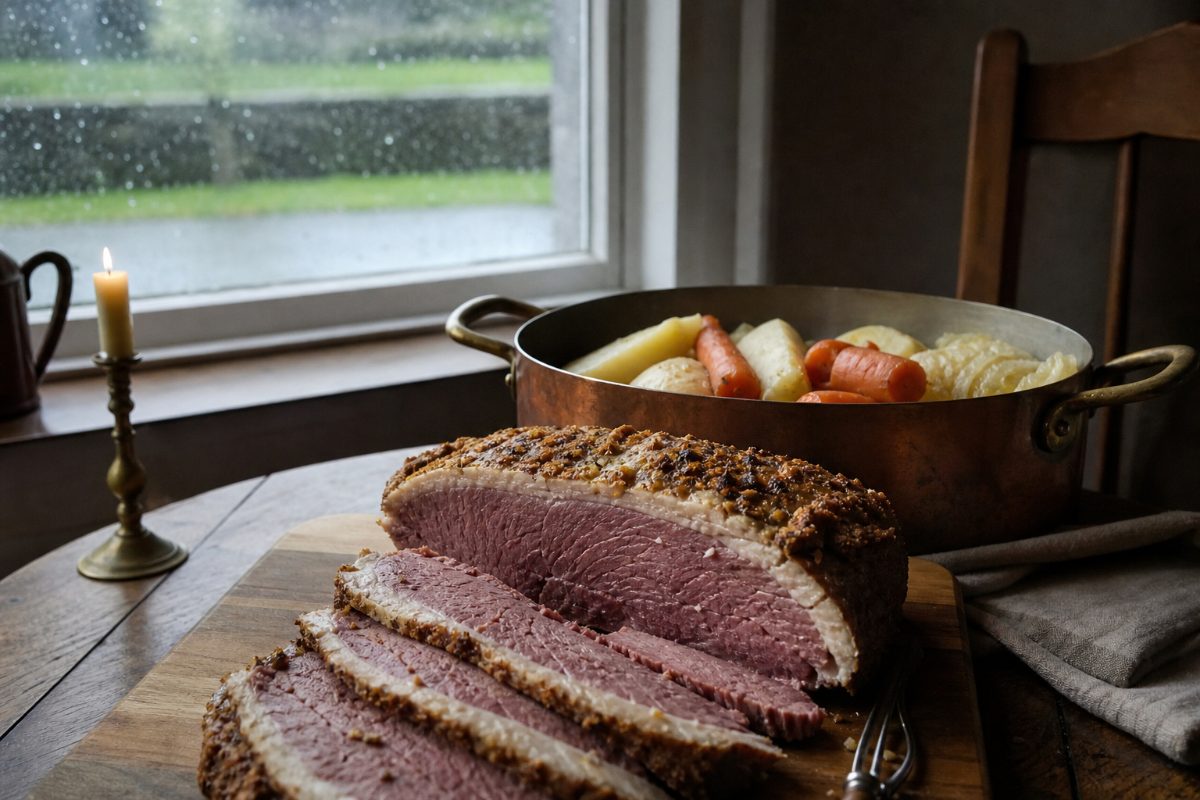
It started, as most of my kitchen disasters do, with overconfidence. I'd eaten spiced beef every Christmas in Cork growing up, usually carved thick at a relative's table with a heel of brown bread and absolutely no ceremony whatsoever. It was just there, the way the crib was just there, the way the smell of cloves meant it was nearly Christmas. At some point in my thirties I decided I should make it myself.
What I did not fully appreciate was that traditional Cork spiced beef is not a weekend project. It is a week-long commitment, minimum. The beef needs days to cure in the spice mix before it ever goes near a pot. I found this out on the 22nd of December, which was not ideal timing.
The cut I used that first year was brisket, which was correct. The spice mix I cobbled together from memory and a few different printed recipes was, in hindsight, all over the place. I used too much clove, not enough allspice, and I somehow convinced myself that a bit of smoked paprika would be a nice modern touch. It was not. The result was a piece of beef that smelled vaguely festive but tasted of confusion. We ate it anyway, with mustard and apologies.
What the spice mix actually needs
The following year I did proper research. Cork spiced beef has a long history as a cured, spiced joint associated with the city's curing and butter trade. The flavour is quite specific: warm rather than hot, sweet from the allspice and a little treacle, with clove and mace in the background rather than upfront. It is not the same as a mulled wine situation where you throw every Christmas spice at something and hope for the best.
The mix that worked for me, after two more attempts, is roughly this: ground allspice as the dominant note, then black pepper, ground cloves used sparingly, a little mace, ground ginger, and a small amount of brown sugar or treacle to help the cure along. Some recipes add saltpetre for the distinctive pink colour inside. I skipped it, mostly because it took more sourcing than I could manage in December, and the beef was a bit greyer inside as a result. It tasted fine but looked less dramatic on the board.
The salt cure matters as much as the spices. You need enough salt to properly cure the meat over the resting days. Under-curing it means the texture stays closer to a plain pot roast, which is grand but it is not spiced beef. The first time I got the balance right, there was a noticeable difference in the texture, slightly firmer and with the spice worked all the way through rather than sitting on the surface.
The resting time you cannot skip
Four to five days in the fridge, turning the joint daily and rubbing the cure back in. This is non-negotiable. I tried three days once when I was behind on timing. You could tell. The flavour was present but thin, like you'd described spiced beef to the beef rather than actually making it.
If you are planning this for Christmas, start the cure around the 19th or 20th of December. That gives you a comfortable window to cook it on the 24th or 25th, and spiced beef is excellent cold anyway, so there is no pressure on timing. It is one of those great things you can make ahead and simply slice as needed across the whole Christmas period. It keeps well for days in the fridge and arguably improves as it sits.
Cooking it low and slow
The traditional method is to simmer the joint gently in water with a few vegetables and aromatics, onion, carrot, a bay leaf, maybe a little more allspice. It takes a few hours depending on the size of the joint. You are looking for something tender enough to slice but not falling apart. When you press the cooked joint under a weighted board as it cools, it firms up beautifully and slices cleanly.
Some people roast it after simmering to get a little colour on the outside. I do this now, twenty minutes in a hot oven with nothing on it. The outside catches slightly and there is a moment in the kitchen that is purely Christmas, that specific warm spice smell mixed with the beef catching in the heat.
I think about that smell every year now, the way it fills the kitchen on the afternoon of Christmas Eve while everything else is still being sorted. There is something about food traditions that does exactly what the old Christmas Eve customs do: they tell you where you are in the year, they anchor the whole thing. The spiced beef sitting on the counter in its foil is as much a signal as any decoration.
If you have never made it before, give yourself the full week and do not add smoked paprika. Everything else is fairly forgiving.