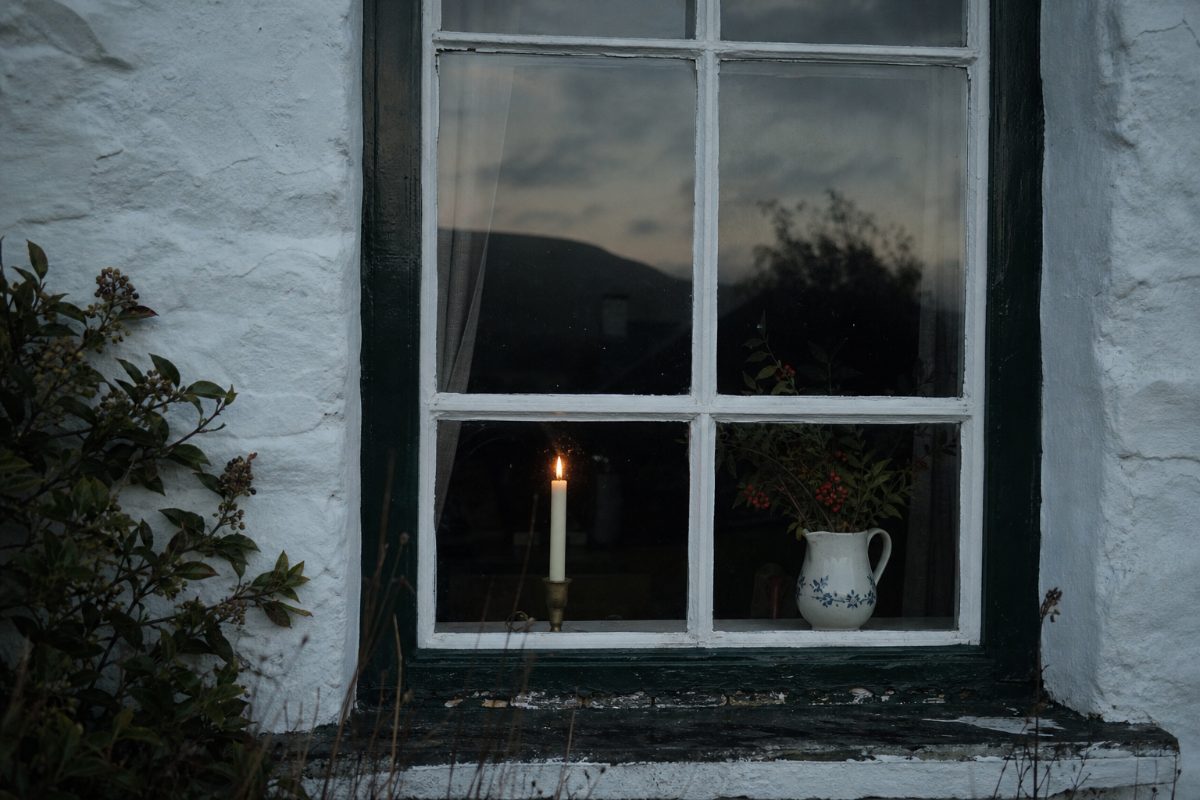
On Christmas Eve, in houses all over Ireland, someone lights a candle and sets it on the windowsill. It might be a chunky church candle in a jam jar, or one of those battery-operated flickers that does the job without the worry. Either way, the gesture is the same. It says: there is light here, and you are welcome.
For a lot of families, this happens almost automatically, the way putting up the tree or hanging the wreath does. But not everyone knows where the custom actually comes from, or why it still matters.
Where the tradition comes from
The Christmas candle has roots that go back several centuries in Ireland. The simplest explanation is that the light was a symbol of welcome for Mary and Joseph, a way of saying that if the Holy Family were travelling this night, they would find no closed door here. That religious meaning ran deep in a country where Catholicism shaped the rhythm of the whole year, not just Sunday mornings.
But there was a more practical and painful layer to it too. During the Penal Laws, when Catholic worship was suppressed, Mass was often said in secret. The candle in the window was said to be a signal to priests that it was safe to come and celebrate Christmas Mass in that house. Families could plausibly tell any soldiers or authorities that they were simply lighting the way for the Christmas star, or for the travelling couple from the Bible story. The custom gave people a way to practise their faith quietly, using an image of hospitality as cover.
How much of that precise history is documented and how much grew in the telling is hard to say, but the story stuck because it felt true to something real about how people survived that period. The candle was both innocent and defiant at the same time.
Regional differences worth knowing
The tradition was not identical everywhere. In some parts of Connacht, the candle was lit by the youngest child in the house, which made it their moment, something to look forward to and remember. In other areas, the eldest daughter or the woman of the house was the one to do it, a nod to her role at the centre of the home.
Some households placed candles in every window facing the road, so the whole front of the house glowed. Others kept it to one, the main window of the kitchen or the sitting room, wherever the family gathered. In rural areas with long laneways and scattered neighbours, that single point of light across dark fields meant something different than it does on a housing estate today, but the impulse behind it is the same.
The candle was traditionally left burning through the night, often placed in a turnip or a bed of sand or salt to keep it stable. These days, most people use a holder of some kind, or choose the LED version for safety reasons, especially in houses with small children or curious cats.
Why younger families are bringing it back
There has been a noticeable shift over the last several years, with younger Irish families actively looking for traditions that feel genuinely theirs. Not imported from American Christmas films, not bought as part of a themed box. Something with a real story behind it.
The candle fits that need almost perfectly. It costs next to nothing. It involves the children. It connects the house to something much older without requiring anyone to be particularly religious. You can tell the story of the welcome, or the secret Mass, or simply say: this is what Irish families do on this night, and now we do it too.
If you have never done it before, tonight is as good a night as any to start.